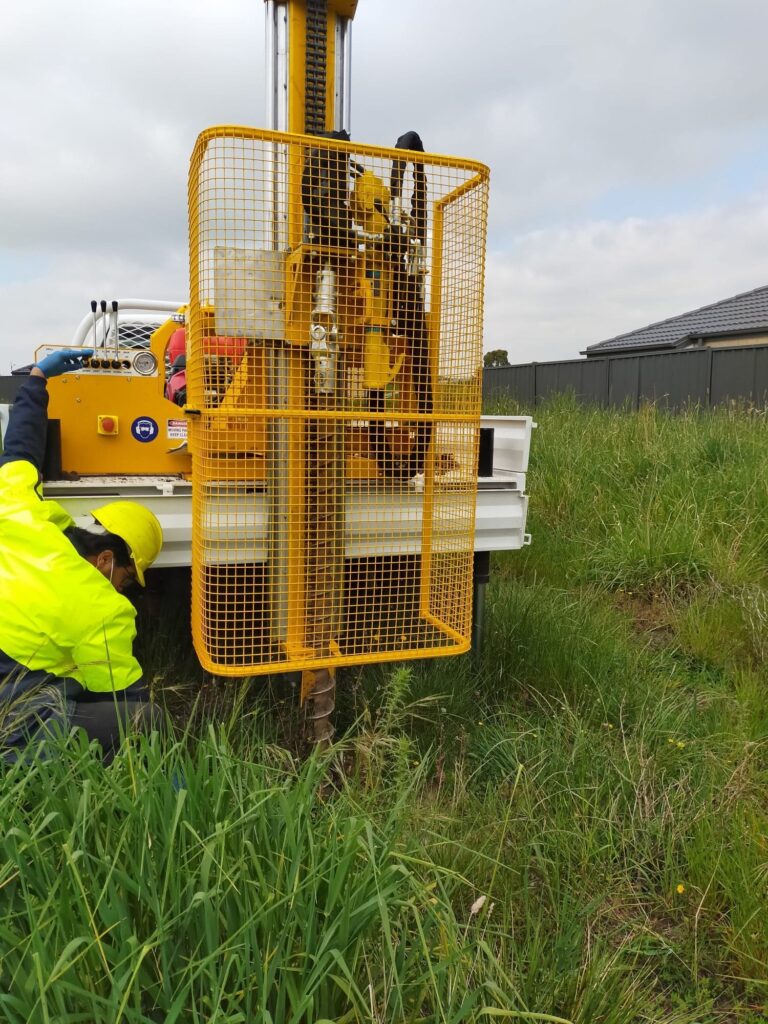
Residential soil testing
Residential Soil Testing Melbourne – Site Classification & Soil Reports
Looking for reliable residential soil testing Melbourne services? Geotechnical Engineering Services Pty Ltd (GES) provides professional soil testing, site classification reports and geotechnical investigations for new homes, extensions, townhouses and residential developments throughout Melbourne and Victoria.
Our experienced geotechnical engineers investigate subsurface soil conditions, assess soil reactivity and provide practical footing and foundation recommendations to support residential construction projects.
All relevant investigations and reporting are undertaken with reference to AS 2870 – Residential Slabs and Footings and AS 1726 – Geotechnical Site Investigations, where applicable.
Professional Residential Soil Testing in Melbourne
A residential soil test, also known as a geotechnical site investigation, helps determine the soil characteristics, ground conditions and potential ground movement beneath a proposed building.
GES conducts residential soil testing in Melbourne using appropriate field investigation techniques, including borehole drilling, soil sampling, field testing and laboratory testing, depending on site conditions and project requirements.
Our residential soil testing services are suitable for:
New homes and residential developments
House extensions and additions
Townhouses and multi-unit developments
Granny flats and ancillary structures
Swimming pools
Retaining walls and associated structures
Demolition and redevelopment sites
The investigation results assist structural engineers and building designers in selecting suitable footing and foundation systems.
Residential Site Classification as per AS 2870
Residential site classification in Melbourne is an important part of foundation design, particularly where reactive clay soils, uncontrolled fill or abnormal site conditions are present.
In accordance with AS 2870, residential sites may be classified as follows:
| Site Class | General Description |
|---|---|
| A | Most sand and rock sites with little or no ground movement from moisture changes |
| S | Slightly reactive clay sites |
| M | Moderately reactive clay sites |
| H1 | Highly reactive clay sites |
| H2 | Highly reactive clay sites with greater characteristic movement |
| E | Extremely reactive clay sites |
| P | Sites with particular or abnormal conditions requiring site-specific assessment |
Factors influencing site classification include:
Soil type and reactivity
Existing fill and ground conditions
Mature trees and vegetation influences
Previous structures and demolition
Surface drainage and abnormal moisture conditions
Local geological and groundwater conditions
GES prepares professional soil classification reports to assist structural engineers with residential footing and foundation design.
What Is Included in a Residential Soil Test Report?
Our residential soil testing Melbourne services may include the following, depending on the project requirements:
Site inspection and assessment of existing conditions
Borehole drilling and subsurface soil investigation
Soil profiling, sampling and identification
Assessment of soil consistency and strength
Laboratory testing where required
Site classification in accordance with AS 2870
Assessment of reactive soil and potential ground movement
Geotechnical recommendations for slab and footing design
Allowable bearing pressure and founding depth recommendations where applicable
The completed soil test report provides relevant geotechnical information for builders, structural engineers, architects and building designers.
For more complex projects, GES also provides geotechnical site investigation services.
Why Choose GES for Residential Soil Testing?
Geotechnical Engineering Services Pty Ltd provides professional geotechnical investigation and soil testing services supported by engineering expertise and a NATA-accredited geotechnical laboratory.
Our advantages include:
Experienced geotechnical engineering professionals
NATA-accredited laboratory testing within the scope of accreditation
Investigations and reporting with reference to applicable Australian Standards
Practical footing and foundation recommendations
Competitive pricing and efficient turnaround
Services throughout Melbourne and regional Victoria
Clear communication with homeowners, builders and structural engineers
Our investigations are undertaken with reference to relevant standards, including AS 2870 and AS 1726. Further information about Australian Standards is available from Standards Australia.
Residential Soil Testing Across Melbourne and Victoria
GES provides residential soil testing and site classification services throughout Melbourne, including northern, western, eastern and south-eastern suburbs.
Our service areas include:
Northern Melbourne: Epping, Wollert, Craigieburn, Greenvale, Mernda and surrounding suburbs.
Western Melbourne: Sunbury, Melton, Werribee, Tarneit, Wyndham Vale and surrounding suburbs.
Eastern Melbourne: Doncaster, Ringwood, Montmorency, Lilydale and surrounding suburbs.
South-Eastern Melbourne: Dandenong, Cranbourne, Berwick, Pakenham and surrounding suburbs.
We also provide geotechnical investigations for selected regional Victorian locations, including Geelong and surrounding areas.
Frequently Asked Questions About Residential Soil Testing Melbourne
How much does residential soil testing cost in Melbourne?
Residential soil testing costs depend on the site location, number and depth of boreholes, ground conditions, site accessibility and project requirements. Contact GES for a quotation specific to your proposed development.
Is soil testing required before building a house?
A soil test and site classification are commonly required before designing residential slabs and footings. The investigation identifies subsurface conditions and provides relevant information for foundation design.
What is a Class P soil classification?
Class P applies to sites with particular or abnormal conditions, such as uncontrolled fill, significant vegetation influences, abnormal moisture conditions or other geotechnical constraints. These sites generally require site-specific engineering assessment.
How long does residential soil testing take?
Field investigations for a typical residential property can often be completed within a few hours. The overall reporting timeframe depends on the investigation scope, ground conditions and laboratory testing requirements.
What does a residential soil testing report include?
A residential soil testing report typically includes borehole logs, soil descriptions, site classification, assessment of soil reactivity and relevant geotechnical recommendations for footing and foundation design.
Request a Residential Soil Testing Quote in Melbourne
Planning a new home, extension, townhouse development or residential construction project?
Geotechnical Engineering Services Pty Ltd (GES) provides reliable residential soil testing Melbourne services, site classification reports and practical geotechnical advice to support your project.
Contact GES today to request a quotation or discuss your residential soil investigation requirements.
Website: www.geoservices.com.au